But Not If You’re a Millennial…
Time to get real. Time to ask the questions that politicians avoid.
For many born in the glow of the post war consensus, it wasn’t a dream to own your own house. It was a reality.
Even if you didn’t want the hassle of home ownership, public housing was high quality.
The whole house as an investment business came to pass when Thatcherite free market ideology became the orthodoxy in the UK economy.
Thatcher and her weirdo mentor Keith Joseph identified home-owning, shareholding democracy was the foundation on which their Thatcherite dream was going to be built.
The deal sold to many a millennial leaving school after the turn of the century was simple: invest in yourself, study hard, get a graduate job, and you too can be part of the modern British dream.
After all, when the British electorate was persuaded to smash the post-war consensus and replace it with Thatcherism, they did so on the pretence that the good times would never end.
Whilst there continued to be enough actual homes for purchase, few politicians demurred.
The problems started in the mid 1990’s. Demand rapidly outstripped supply.
For those who bought before 1994. Happy days. Conversations about how much equity people thought they owned became competitive and compulsory around the barbecues of the Thatcherite newly enriched class.
But as we shall see it was a chimera.
Even Anthony Blair didn’t see the need to undo the 1980s neo liberal reforms.
Instead he and Chancellor Gordon Brown decided to implement Labour’s natural altruism through cash-heavy investment in Public Services.
In the first term Education was the main beneficiary. From 2001-10 the NHS underwent a huge transformation due to doubling investment in real terms,
But it wasn’t all bread and roses for the New Labour government.
As a society, Britain made a major irreversible policy step change post the 1979 Conservative Party election victory
The Tories chose to actively use a free market approach to meet our challenges.
Be it energy distribution, communications networks, mass transit, water and sewage, higher education, or housing, everything was up for sale.
45 years on from the glory days (for some) are over. The UK is Broken.
We are now This Septic Isle.
We have an energy crisis, a housing crisis, poo in the rivers, outside of London public transport doesn’t work, and the housing market itself is completely broken.
Not according to the Tories. To them, all is as should be.
The problem with the Conservatives is that they fundamentally believe that free markets will eventually fix every problem.
Whilst most of us are chafing under the cost-of-living crisis, the Conservatives simply don’t see that there is a problem, and for them to address the problem would require them to admit that they have been wrong for many years.
They would be forced reverse decades of policy positions first adopted under Margaret Thatcher.
These fundamental problems will not go away.
Just like in 1997, when the Tories broke the country, a Labour government will have to step in and try to steady the ship.
The difference now is that tweaking will not be enough. Starmer can realistically only stop HMS UK from sinking in the first term. But the second term will require vision.
The Tories 1979 style step change must happen in the second term. But on the basis of Social(ist) Democracy where markets are regulated to work for the many.
Housing.
An Englishman’s home is his castle, is it not? But what if the housing market is structured in such a way that many people in full-time work cannot gain access to it?
Renters are punished by mortgage prices, as are those trying to save for a deposit amidst the cost-of-living crisis.
Yet there are a group of people out there who enjoy wealth generated by the rigged housing market.
Many commercial landlords are people who don’t work as hard and enjoy an excellent quality of life as a result of their canny property market investments.
Property became a respectable form of gambling. But this belies the fact that it is gambling with regular people’s lives
Landlords add additional pressure to the housing market, to the point where the market is already fundamentally broken.
For years, governments have allowed this to happen.
Property growth can be spun into the falsehood that there is economic growth.
But there are huge moral questions over whether homes should ever be allowed to be commoditised.
Commoditising energy is one thing, but to commoditise people’s homes risks undermining the entire fabric of society.
Core conservative values preach the importance of the family unit rather than the state to fix our problems.
How is this even possible when many families have zero chance of ever affording their own home.
So, how do you fix the problem?
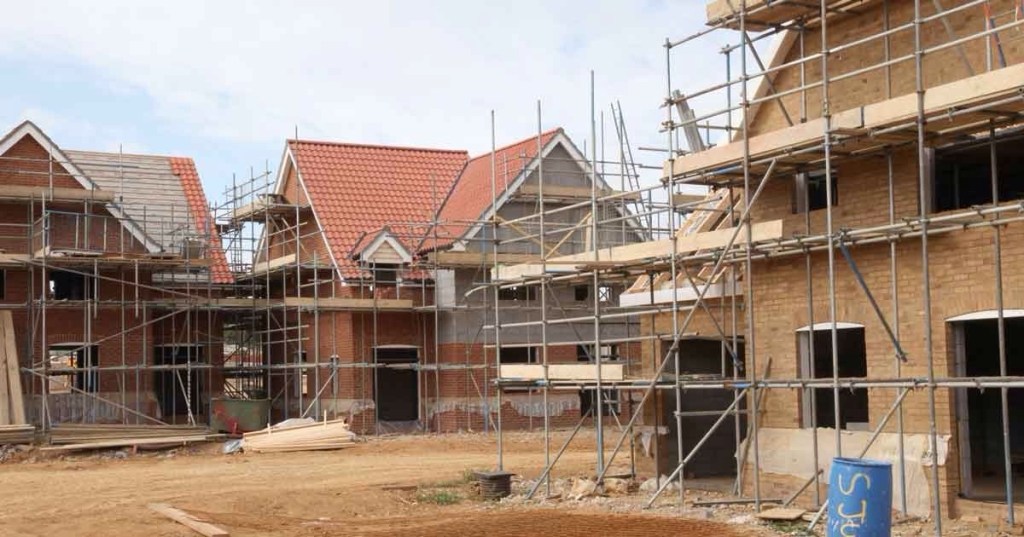
Build more homes the Tory ministers say. But landlords keep snapping up properties.
Social Housing is probably the only viable solution.
I can’t see the electorate swallowing it.
When most of us think council housing, we think sink estates.
But we have now reached a point where social housing is the only practical answer.
Only the most extreme left-wingers would reject the liberal premise that property rights are fundamental to a free, open, and democratic society.Once you reject property rights, you move from being a socialist to a communist.
But the only other alternative to social housing, is to nationalise large property portfolios retained by landlords.
That is unpalatable for many people.
But what about Millennials who may never get on the property ladder, who are reaching their 40thbirthday still living with their parents and with multiple generations under one roof.
They will start to question the property rights of landlords, and whether they are valued above access to the housing market for those who work hard and pay that way.
Ultimately, the right to a decent home is just as important as the right to own property, and in my opinion the right to live in your own space, and make it a hone trumps that of the right to invest in property portfolios.
Ultimately, if we don’t invest in social housing now, then the investment commoditisation of the housing market will have to end. There will need to be a drastic state intervention.
Now that really is food for thought for Tories everywhere.

 Site Title